Risk Adjustment Model Update
July 28, 2025

November 4, 2024

Risk Adjustment Model Update

July 28, 2025
November 4, 2024
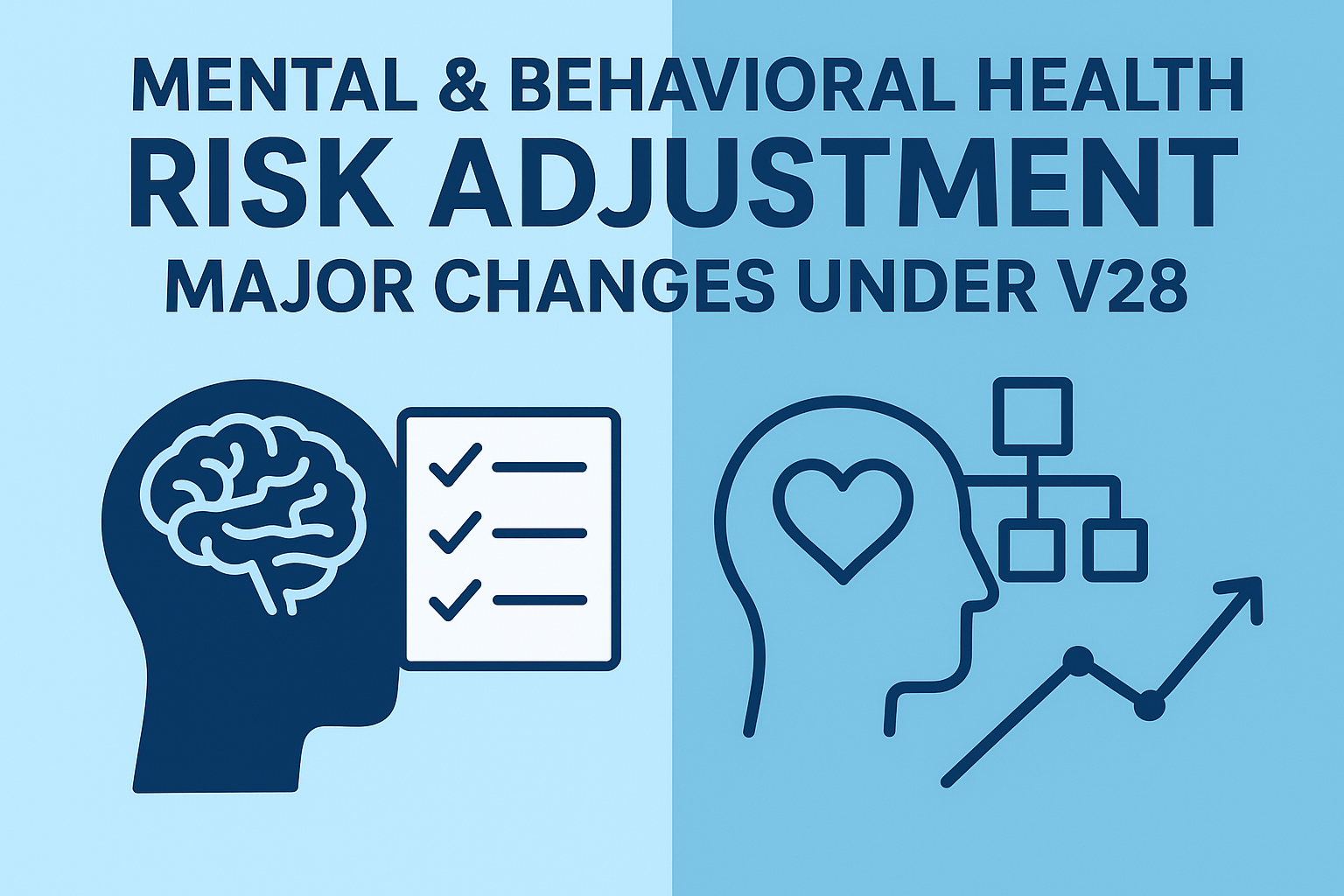
Under CMS-HCC Version 28, the risk adjustment model has been significantly revised—particularly in the domain of mental and behavioral health. V28 expands behavioral health categories — conditions like Major Depressive Disorder, Anxiety Disorders, Bipolar Disorder, Eating Disorders, and Personality Disorders continue to (or now newly) risk adjust.
In the older Version 24 model:
Conditions like Major Depressive Disorder (F33.1) and generalized anxiety were mapped to HCCs and contributed to risk scores.
In Version 28, these conditions have been restructured rather than simply excluded. The model has expanded from 4 to 5 psychiatric HCC categories with more specific requirements.
- Still Risk-Adjusting in V28:
G30.x – Alzheimer’s disease
F01.x – Vascular dementia
F32.x / F33.x – moderate or severe major depression codes (e.g., F32.1, F32.2, F33.1, F33.2) still map to HCC 155.
- No Longer Risk-Adjusting:
Mild, unspecified, and remission codes no longer risk-adjust.
F41.x – Anxiety disorders
Some lower-severity or non-chronic mental/behavioral diagnoses do not risk adjust, but core conditions like depression, anxiety, bipolar, and schizophrenia remain included.
This is a substantial change for coders and Medicare Advantage Organizations (MAOs), as these diagnoses were commonly used in the risk adjustment process under V24.
Documenting and coding depression still matters for patient care and clinical accuracy.
But for risk adjustment and payment models under V28, only the severe forms of major depressive disorder are recognized.
CMS is phasing in V28 over three years:
2024: Blended model implementation begins
2025: Continued phased approach
2026: Expected full V28 implementation
Removing common psychiatric diagnoses from the model can reduce risk scores, directly impacting plan revenue and care coordination strategies. It also forces a sharper focus on clinical documentation and specificity, especially for cognitive disorders that still qualify.
To ensure accurate and compliant coding under V28, providers and coders should focus on capturing strong clinical indicators that validate neurocognitive diagnoses.
MMSE (Mini-Mental State Exam) Scores
A validated cognitive screen helps support Alzheimer’s or dementia diagnoses.
Neuropsychological Evaluations
These reports strengthen diagnostic accuracy and are valuable for audit protection.
Behavioral Health Notes
Detailed documentation from psychiatrists, neurologists, or behavioral health specialists offers supporting context.
Functional Impact Notes
Describe how the cognitive condition affects daily living and care needs.
If your organization relies on behavioral health conditions in its risk adjustment strategy, now is the time to realign your approach.
Update internal HCC crosswalks to reflect V28 mappings.
Educate providers and coders about the loss of MDD/anxiety from the risk model.
Audit documentation to identify patients who may qualify under neurocognitive HCCs instead.
Enhance training on recognizing and documenting G30.x and F01.x codes properly.
Engage behavioral health teams to update workflows in light of these changes.
The shift to CMS-HCC Version 28 marks a narrowing of scope for mental and behavioral health conditions. MAOs must proactively respond to these changes by adjusting documentation strategies, educating stakeholders, and closely monitoring diagnosis data.
While depression and anxiety no longer impact risk scores, the accurate capture of qualifying neurocognitive conditions can still make a measurable difference.
As Medicare Advantage organizations adapt to the CMS-HCC Version 28 risk adjustment model, key changes are reshaping how chronic conditions—particularly metastatic cancers—affect risk scores and payment accuracy. One of the most notable updates in V28 is the enhanced emphasis on specificity and clinical alignment, especially when it comes to cancer coding.
Greater emphasis on metastatic cancers: The new model assigns a higher weight to diagnoses reflecting both primary and secondary malignancies.
Refined HCC mappings: Conditions are grouped in a way that better mirrors actual disease severity and patient complexity.
Reduced tolerance for vague documentation: Using generic or unspecified codes may no longer be enough to qualify for risk adjustment—clinical specificity is now essential.
Let’s take a typical coding example involving both a primary lung malignancy and a secondary brain metastasis. Under the previous model, this combination contributed significantly to a member’s risk score. Under V28, the same coding leads to even greater risk recognition.
What’s the impact?
The updated model rewards thorough and specific documentation of metastatic conditions.
Even without changing the patient’s health status, the risk adjustment compensation improves under V28.
The improvement reflects CMS’s push toward more clinically accurate coding that aligns with real-world disease progression.
Improved reimbursement accuracy: Health plans that ensure precise documentation and coding can receive more appropriate capitation payments.
Coding precision is no longer optional: CMS has removed many unspecified cancer codes from risk adjustment eligibility. For example, lung cancer must now include laterality and site specificity to be counted.
Clinical alignment drives value: The new model prioritizes diagnoses that reflect a comprehensive view of disease burden and treatment intent.
To capture the full risk adjustment value under V28:
Ensure both primary and secondary cancer sites are explicitly documented.
Record staging, biopsy findings, and treatment goals in the medical record.
Link the diagnosis to supporting clinical evidence—like imaging, consults, and progress notes.
Example Documentation:
“Patient diagnosed with right lung carcinoma confirmed via biopsy, with evidence of metastasis to the brain. Currently undergoing palliative chemotherapy.”
Review and update older cancer diagnoses to ensure they conform with V28 logic.
Educate providers on the importance of site-specific cancer coding.
Use technology to detect and address under-coded metastatic conditions across charts and claims.
Our AI-enabled Risk Adjustment Platform supports your V28 transition by:
Automatically identifying vague or unspecified cancer codes.
Validating provider documentation against clinical coding rules.
Recommending accurate and compliant HCC assignments.
Modelling the impact of proper coding on overall risk scores.
Let us help you maximize compliant documentation and minimize missed opportunity under V28.
Reach out at: sales@healthdatamax.com or you can visit www.healthdatamax.com
If your coding or documentation still leans on broad labels like E11.69 (Type 2 diabetes with other complication) — it’s time for a rethink.
Under CMS’s newer model, only clinically specific complications will map to an HCC — and many general codes no longer qualify for risk adjustment at all.
The good news? When documented correctly, specific diabetes complications can actually increase RAF scores — meaning more accurate reimbursement for higher-risk members.
Let’s look at how updating your diabetes coding impacts risk scores:
Old Code (V24 Model):
E11.69 – Type 2 diabetes with other complication
→ Lower RAF value due to general classification
Updated Code (V28 Model):
E11.22 – Type 2 diabetes with chronic kidney disease
→ Higher RAF value due to clinical specificity
Key takeaway: Replacing broad codes like E11.69 with specific ones like E11.22 improves both compliance and reimbursement. When done consistently, this shift can make a meaningful financial difference across your member population.
To correctly code specific complications — and to survive audit scrutiny — your documentation needs to reflect clinical precision. Here’s how:
For CKD-related Diabetes (E11.22):
GFR or eGFR results showing renal impairment
Notation of CKD stage in the progress note
Medication list with nephrology-focused management (e.g., ACE inhibitors)
Referral or notes from a nephrologist supporting the diagnosis
For Retinopathy or Neuropathy:
Results of ophthalmology or neurology consults
Mention of visual changes, nerve symptoms, or treatment plans
Fundus photography or EMG if applicable
Use each visit to update or reaffirm complication activity. A static problem list isn’t enough.
Using E11.69 as a catch-all
Leaving complications undocumented
Assuming lab values alone are sufficient without provider interpretation
Ignoring referrals and consults that justify specific coding
More Accurate Payments
CMS’s risk scores now better align with the real clinical burden — but only if documentation reflects true complexity.
Audit Protection
Vague or unsupported diagnoses are top audit triggers. Specificity with lab data, consults, and clear narratives shields you from retroactive recoupment.
Better Patient Tracking
Specific codes make it easier to monitor disease progression, coordinate referrals, and flag patients for chronic care programs.
Train providers to document complications, not just “diabetes.”
Create cheat sheets with ICD-10 mappings for common diabetes complications (e.g., CKD = E11.22, retinopathy = E11.319).
Set up query templates in your EHR to prompt for CKD stage, nephrology involvement, or A1c trends.
Review EHR problem lists to identify outdated or vague codes.
Risk adjustment is evolving — and CMS is rewarding those who evolve with it. Under the updated model, generalized diabetes codes are out, and specific, evidence-backed complications are in.
If you’re not capturing diabetes with CKD, retinopathy, or neuropathy accurately, you're not just risking compliance — you’re losing out on rightful reimbursement.
Precision in coding isn’t optional anymore — it’s your path to smarter payment, stronger audit defense, and better care.
Need help auditing your diabetes risk codes or training your providers for V28 accuracy? Contact us
In Medicare Advantage risk adjustment, Essential Hypertension (I10) is one of the most commonly documented diagnoses. But here’s the catch: it doesn’t risk-adjust on its own. That’s right—despite its clinical prevalence, I10 has no direct HCC value under either Version 24 or Version 28 of the CMS-HCC model.
So why does it still matter?
Because hypertension serves as a contextual cornerstone—a red flag, a compounding factor, and a clinical clue that more complex, risk-adjustable conditions may be present. It's what you tie to hypertension that makes all the difference.
When it comes to risk adjustment, hypertension (I10) alone doesn't increase the risk score—but when it's associated with complications, it does.
Here’s how:
I10 – Essential Hypertension
Does not risk-adjust under V28.
It should still be documented, as it often supports more complex conditions.
I110 – Hypertensive Heart Disease with Heart Failure
Does risk-adjust under HCC 226.
Carries a risk weight of 0.36 in V28.
Must be supported by documentation that links hypertension to the heart condition.
I120 – Hypertensive Chronic Kidney Disease (CKD Stage 5)
Does risk-adjust under HCC 326.
It carries a significantly higher risk impact compared to earlier models.
Clinical documentation must support both CKD staging and its relationship to hypertension.
Coding Tip: When hypertension contributes to complications like heart failure or CKD, be sure to code both and ensure the provider explicitly documents the connection.
Example:
A member with only I10 contributes no risk score.
But a member coded with I10 + I110 (CHF) or I10 + I120 (CKD Stage 5) gets a risk-adjusted HCC weight, reflecting greater disease burden.
Hypertension doesn’t live in isolation. It's often the underlying cause or accelerator for:
Heart Failure (I110, I130)
Chronic Kidney Disease (I12, I13 series)
Stroke & Vascular Disease
To ensure accurate risk capture:
Review labs and imaging (e.g., GFR for CKD, Echo for CHF)
Check for specialist notes (e.g., nephrology, cardiology)
Code both the hypertension and the related condition
Key Rule: Only code a complication (e.g., I110) if there is clear provider linkage and documentation tying it to hypertension.
The updated CMS-HCC V28 model doesn’t alter hypertension’s standalone status—it still isn’t risk-adjustable. But the related conditions it contributes to now carry even more weight in certain scenarios.
I11.0 – HCC 226: Heart Failure → Assigned moderate risk impact under V28.
I12.0 – HCC 326: CKD Stage 5 → Assigned higher risk impact due to condition severity.
These reflect the clinical gravity of hypertension when it leads to end-organ damage—and highlight the importance of connecting the dots in your documentation and coding.
At Health Data Max, our platform Risk Adjustment Platform uses AI-powered NLP to:
Detect when hypertension is mentioned without linked complications
Flag missed risk-adjustable opportunities
Assist coders in validating diagnosis interdependencies
Recommend adding codes like I110 or I120 only when supported by notes, labs, and longitudinal care evidence
Hypertension may not risk-adjust alone, but when it's part of the broader clinical picture, it becomes essential to accurate risk capture.
"Don’t ignore hypertension—use it as a clinical bridge to find what’s truly driving risk."
Ready to strengthen your risk adjustment documentation and improve RAF score accuracy?
Explore how our Risk Adjustment Platform brings clinical context, coding logic, and AI precision together.
Request a demo to see how we make coding smarter—and compliant.
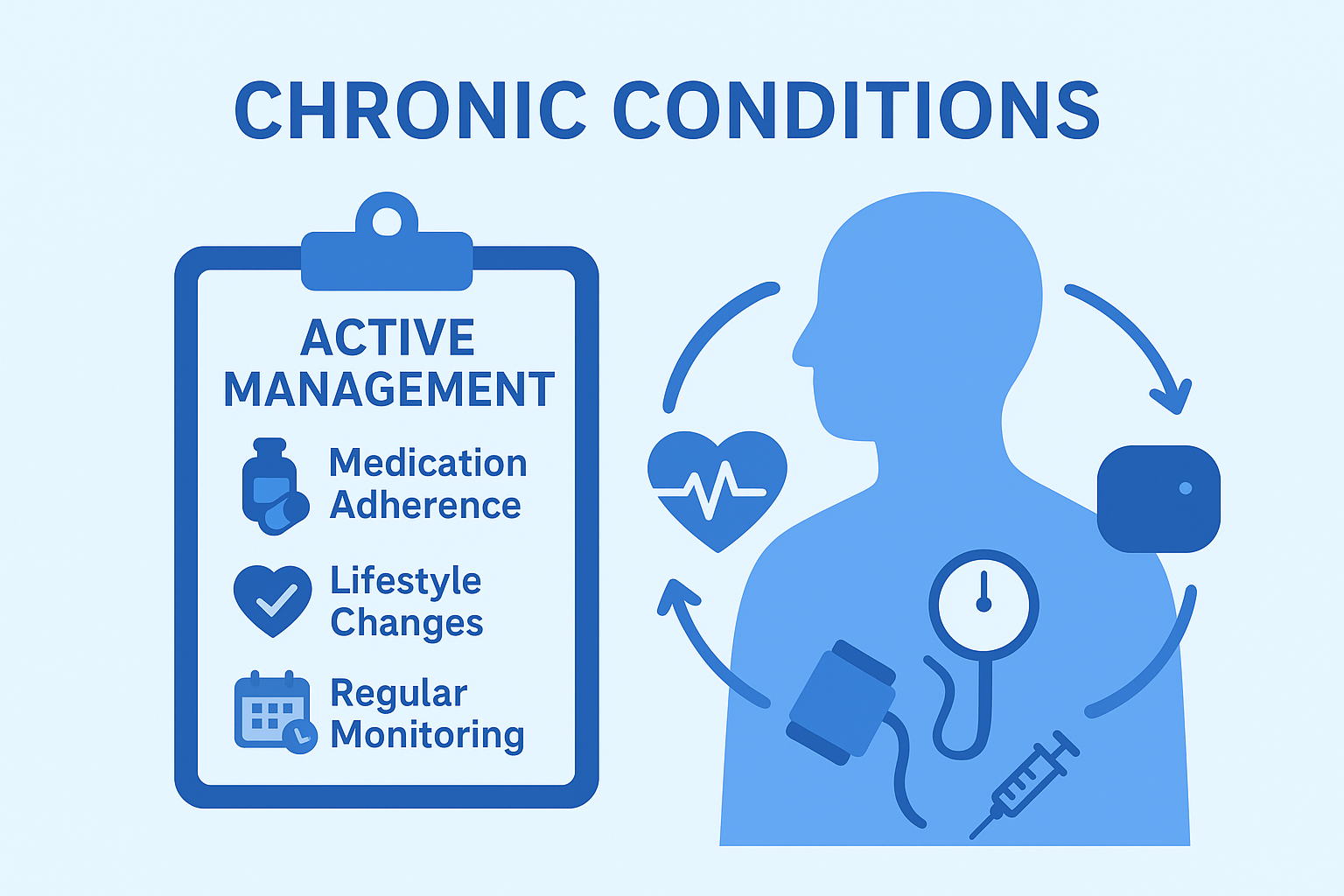
Today, CMS expects that each submitted HCC reflects an actively managed condition, not a passive mention or old record. That means you need to show your work — labs, medications, referrals, and progress notes that prove the condition is still relevant, still monitored, and still part of the care plan.
Let’s break it down with a common example: CKD.
Correct HCC Submission:
Diagnosis: Chronic Kidney Disease
Documentation includes:
Recent lab work (e.g., eGFR or creatinine trends)
Current medication regimen (e.g., ACE inhibitors)
Specialist involvement, such as a nephrology consult
Evidence in the progress note that CKD is being addressed at the visit
This paints a complete, current, and actionable clinical picture.
Diagnosis listed: CKD
No recent labs, no medication updates, and no mention in provider notes
No indication that the condition is being monitored or treated
This type of submission may trigger audits or get flagged as unsupported — even if the diagnosis is technically accurate.
One of the simplest but most powerful habits to build into your workflow is this:
Use each visit to reaffirm the condition’s activity.
This doesn’t mean you have to do a full workup every time — but you should:
Reference recent labs or imaging
Note ongoing medication use or changes
Mention specialist referrals or prior visits
Describe symptoms or the absence of symptoms with monitoring
A short line in the note like “CKD Stage 3 remains stable, monitored with eGFR every 6 months, managed with lisinopril” can make all the difference.
Here’s the bigger picture: CMS is actively tightening standards around risk adjustment documentation — especially under increasing RADV audit activity.
Plans and providers that submit codes without supporting evidence risk:
Clawbacks of payments
Failed audits
Compliance flags
Loss of trust in data integrity
But plans that show active, ongoing management not only protect their risk scores — they also ensure that patients are getting the level of care their conditions require.
For Coders:
Don’t just look for a code — look for proof.
Query providers when documentation doesn’t reflect active care.
Educate your teams on the difference between “on the list” and “being managed.”
For Providers:
Be specific in your progress notes.
Avoid copying forward old diagnoses without current context.
Include actionable phrases like “monitored,” “managed,” or “treated.”
Risk adjustment is a data-driven model — but it depends on real, ongoing care.
At the heart of it is clinical judgment, the provider's decision to monitor, treat, or refer based on the patient’s needs today — not just what was on the chart last year.
So the next time you document a chronic condition, ask:
“Is this diagnosis still active, and have I shown that in the note?”
If yes, your coding will stand strong. If not, it’s time for a quick update — for the sake of compliance, care, and accuracy.
Need help aligning your clinical documentation with HCC coding best practices? Reach out to sales@healthdatamax.com or visit healthdatamax.com to connect with our team.
As we transition from CMS-HCC V24 to V28, many coding professionals and health plans are closely monitoring what’s in, what’s out, and what still carries weight in risk adjustment. One key takeaway? Infectious diseases like Tuberculosis (TB) and Hepatitis C (Hep C) still count—but the documentation has to be done right.
Even with the introduction of new categories and realigned hierarchies in V28, both Tuberculosis and Hepatitis C remain valid HCC-driving conditions—as long as they are clinically supported and actively managed.
Examples from the V28 model:
Pulmonary mycobacterial infection (A310) → Maps to HCC 6: Opportunistic Infections
Hepatitis C carrier state (Z22.51) → Still counts if there's PCR confirmation and a treatment or monitoring plan
Don’t code these infectious diseases as “history of” unless a current care plan is documented.
A history code without evidence of ongoing treatment, evaluation, or monitoring is insufficient for risk adjustment purposes.
Review infectious disease diagnoses carefully before dropping them from claims or EHR exports.
Ensure Z22.51 (Hep C carrier) is accompanied by:
A PCR lab result
A documented treatment plan (e.g., antivirals, specialist referral)
For TB, make sure active or latent infections are supported by:
Chest X-ray or sputum results
Ongoing treatment or surveillance documentation
In V28, CMS is more selective—but not dismissive—of conditions that signal chronic infection risk or impact on care complexity. Coding these correctly supports accurate risk scores, care coordination, and compliance.
Final Thought:
Just because a diagnosis is long-standing doesn’t mean it’s inactive. If your providers are still monitoring, treating, or counselling, then you can still code it. But remember: no care plan, no HCC.
Need help auditing your infectious disease codes under V28? Reach out to us at sales@healthdatamax.com for comprehensive Risk Adjustment platform including audit support.
In recent updates to risk adjustment guidance, there's a sharp focus on stripping out vague or non-specific codes — especially when it comes to conditions like obesity, malnutrition, and frailty.
Why? Because these conditions can significantly influence risk scores, CMS is making it clear: only diagnoses backed by real clinical data should drive payment.
That means coders, providers, and care teams must now treat these diagnoses with a whole new level of scrutiny.
Here’s where things stand:
- Still Valid for HCC Adjustment (with documentation):
E66.01 – Morbid (severe) obesity due to excess calories
E43 – Unspecified severe protein-calorie malnutrition
- No Longer HCC-Adjusting:
E66.9 – Obesity, unspecified
R54 – Age-related physical debility (commonly used to describe frailty)
Codes like E66.9 and R54 are too vague. They lack specificity and don't reflect measurable clinical severity. CMS is signaling that if the diagnosis isn’t clearly defined — and supported — it won’t count.
To ensure diagnoses for obesity, malnutrition, or frailty are accepted and risk-adjusted:
BMI values (Body Mass Index): Make sure they are recent and clearly stated
Weight history or trends: Sudden weight loss, persistent underweight conditions
Nutritional assessments: Dietician or nutritionist notes, feeding issues, lab data
Functional status indicators: For frailty, include PT/OT reports or geriatric assessments
These pieces of documentation don’t just validate the code — they build a clinical narrative that tells CMS this is a real, managed condition, not just a checkbox.
Let’s bring this to life with a couple of examples:
Correct Way:
Diagnosis: Morbid obesity
Code: E66.01
Documentation: BMI of 42, history of failed weight loss attempts, nutritionist involvement, mobility impact
This is risk-adjustable and audit-defensible.
Incorrect Way:
Diagnosis: Obesity
Code: E66.9
Documentation: No BMI, no detail on severity or impact on health
This no longer maps to an HCC and won’t contribute to your risk score.
Correct Way:
Diagnosis: Severe malnutrition
Code: E43
Documentation: Weight loss >10% in 6 months, poor appetite, dietician notes, low albumin levels
Meets clinical criteria and HCC mapping.
Incorrect Way:
Diagnosis: Debility or Frailty
Code: R54
Documentation: “Appears weak,” or “age-related decline” without functional testing
Not valid for risk adjustment. CMS no longer recognizes this as HCC-qualifying.
When documentation lacks specificity, risk scores drop — and payments follow. But the stakes are bigger than just dollars.
Here’s what’s on the line:
Compliance Risk: Unsupported HCCs = audit findings, clawbacks, and headaches
Care Management Accuracy: Risk scores help stratify patients for care programs
Trust in Data: CMS is raising the bar. Plans that adapt will lead, others will scramble
In short, obesity, malnutrition, and frailty are no longer "easy HCC wins". They’re clinical diagnoses — and must be treated that way in the coding and documentation process.
Coders:
Stop defaulting to E66.9 or R54
Query for BMI, lab values, or clinical assessments if missing
Flag vague documentation for review before submission
Providers:
Be clear in describing severity and functional impact
Document contributing factors (e.g., appetite, weight change, mobility)
Include nutritionist or therapist notes whenever available
As risk adjustment becomes more targeted, every code must stand on clear clinical legs. If obesity, malnutrition, or frailty are part of your patient population — and they often are — you must start treating them as conditions that require evidence, not assumptions.
This isn’t just a documentation upgrade — it’s a mindset shift.
So, the next time you see “obesity” or “frailty” in a chart, ask:
Is this code specific enough? Can we back it up if we’re audited?
If not — refine it or leave it out.
Need Help Validating Your Risk Adjustment Submissions?
Reach out to sales@healthdatamax.com Or Contact Us Here.
Let’s make your coding smarter, your documentation tighter, and your scores fully defensible.
Helpful Resource:
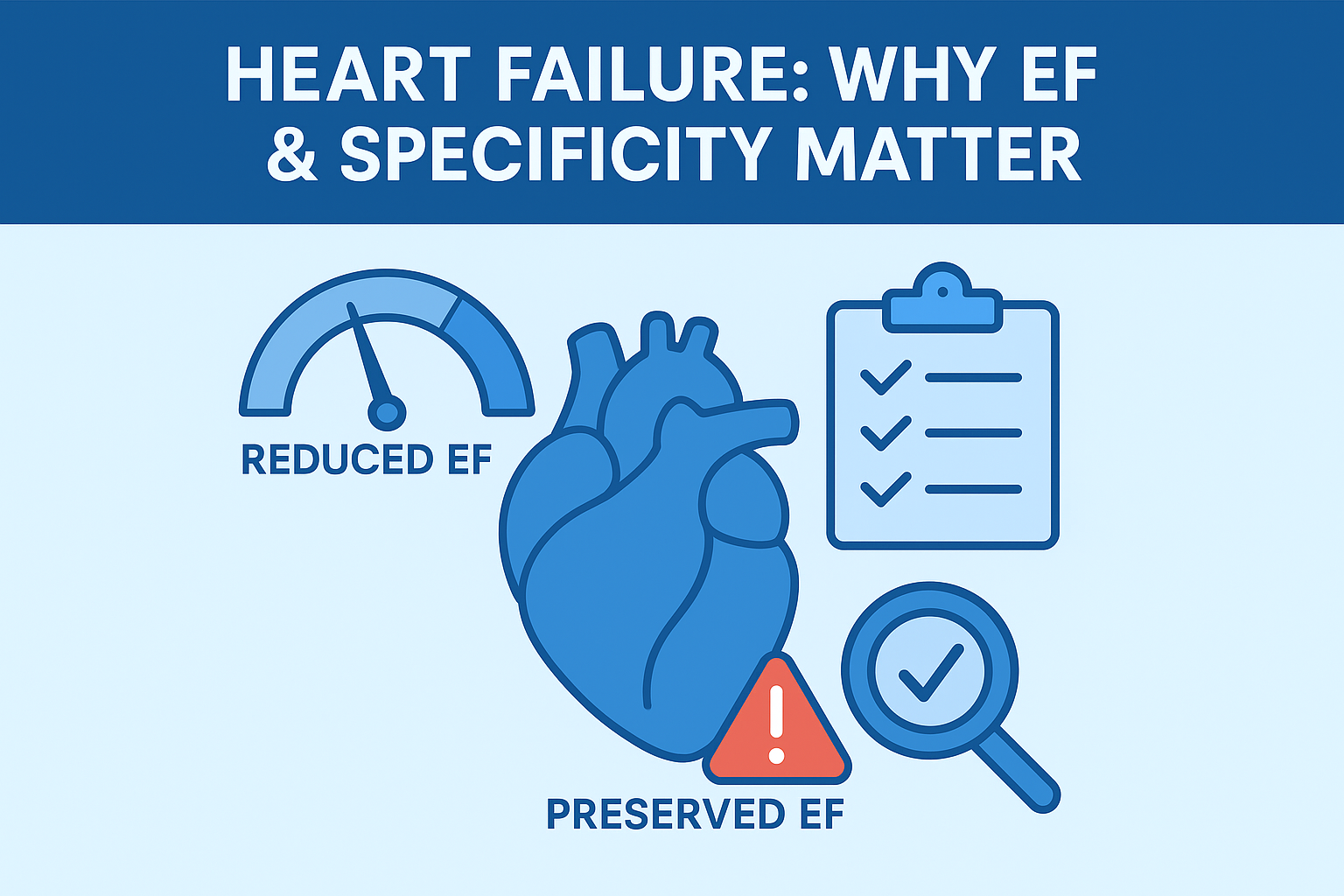
The transition from CMS-HCC V24 to V28 has brought massive changes to how risk adjustment coding works — and one of the biggest shifts is in how heart failure needs to be documented and coded.
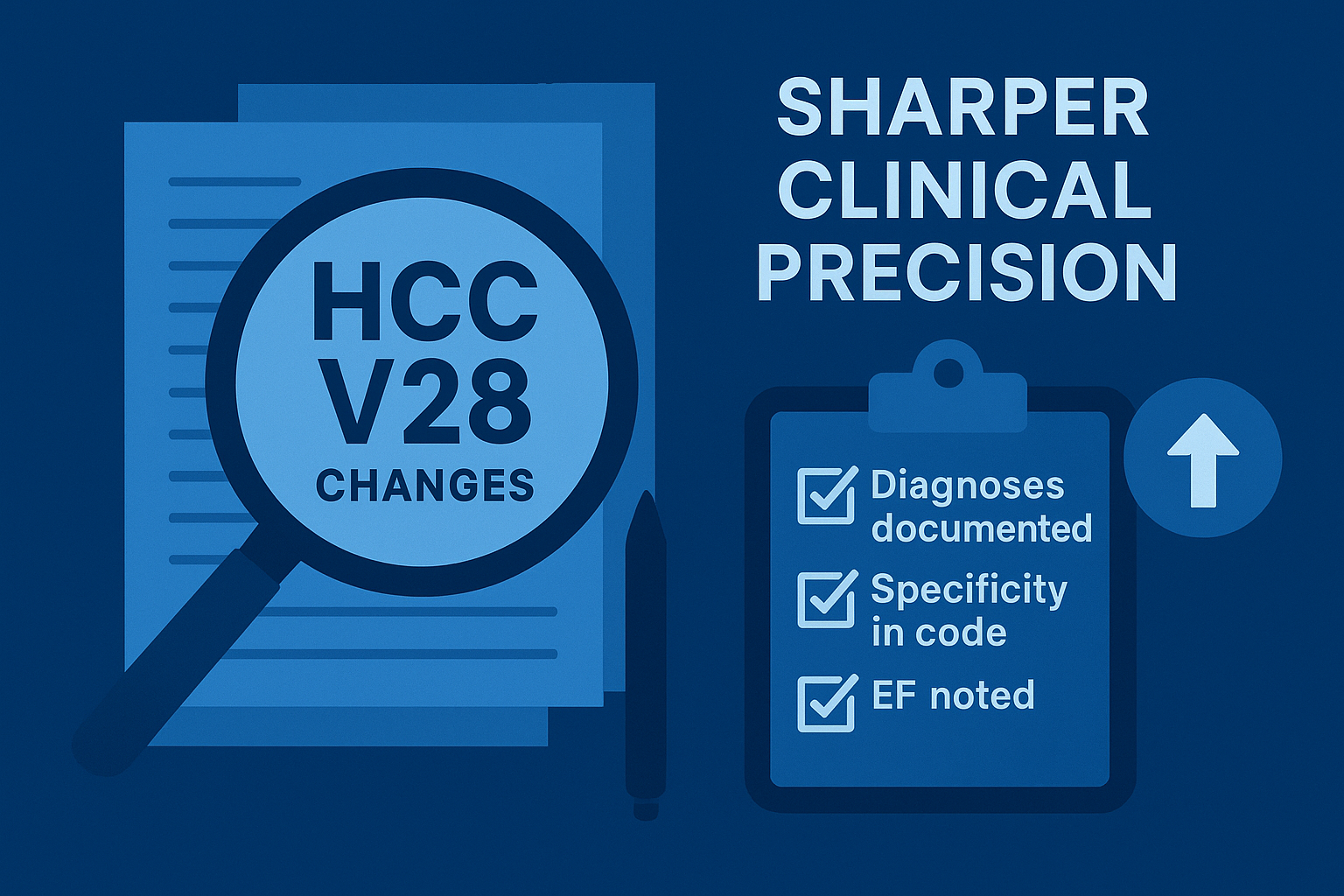
In the V24 model, you might’ve been able to get by with a general heart failure diagnosis. Not anymore. Under V28, specificity is king — and if you’re not documenting the type, chronicity, and supporting EF data, you're not just losing out on risk score points... you’re risking compliance issues.
So, what exactly does this mean in practice? Let’s break it down.
If you're coding heart failure under V28, you must answer three questions:
What type of heart failure is it? (Systolic? Diastolic? Combined?)
Is it chronic, acute, or acute-on-chronic?
Do you have clinical evidence like an echocardiogram to support it?
Without clear answers to these, codes like I50.9 (Heart failure, unspecified) won’t map to an HCC anymore — and that’s a major issue if you’re relying on risk adjustment for accurate reimbursement.
Let’s say you’re reviewing a chart that indicates a patient has chronic systolic heart failure.
I50.9 – Heart failure, unspecified → No longer maps to HCC under V28
I50.22 – Chronic systolic (congestive) heart failure
But that’s not enough on its own! You need clinical validation, like:
An echocardiogram showing EF < 40%
Progress notes that mention reduced ejection fraction
Documentation of medications that align with systolic HF management (e.g., beta-blockers, ACE inhibitors)
CMS isn’t just asking for more — they’re asking for smarter. The new HCC model aims to align documentation with real clinical evidence, not vague assumptions. Here’s how to sharpen your coding lens:
Ejection Fraction (EF) – Include the percentage from the echo
Type – Is it systolic, diastolic, or combined?
Chronicity – Is the patient’s condition acute, chronic, or both?
Clinical Support – Notes from cardiologists, echo reports, radiology findings
1. Risk Score Accuracy
Each HCC that gets mapped influences the patient’s risk adjustment factor (RAF), which in turn affects reimbursement for Medicare Advantage plans. Miss out on specific coding, and you’re leaving money on the table.
2. Audit Readiness
Vague documentation is audit bait. If CMS reviews your claims and sees an HCC without supporting evidence, you could face clawbacks, penalties, or worse.
3. Better Patient Care
More accurate documentation also means better communication among care teams. When EF, chronicity, and HF type are clearly spelled out, care plans are better targeted.
Here’s where many coders and clinicians slip up under the new model:
Using Unspecified Codes – These no longer support HCCs
Omitting EF Values – You need to quote the EF number (e.g., “EF of 35%”)
Not Differentiating Types – Don’t just say “CHF”; clarify systolic vs. Diastolic
Skipping Chronicity – Acute, chronic, or acute-on-chronic must be stated
When coding heart failure under V28, remember — the details matter. Here are the key ICD-10 codes you should know, along with EF criteria and whether they still map to an HCC.
1. I50.22 – Chronic Systolic (Congestive) Heart Failure
Use when EF is less than 40%
Requires documentation of reduced ejection fraction (HFrEF)
Yes, this maps to an HCC in V28
2. I50.32 – Chronic Diastolic (Congestive) Heart Failure
Use when EF is greater than 50%
Documentation should reflect preserved EF (HFpEF)
Yes, this maps to an HCC in V28
3. I50.23 – Acute on Chronic Systolic Heart Failure
Also used when EF is less than 40%
Be sure to document both the chronic condition and the acute exacerbation
Yes, this maps to an HCC in V28
4. I50.9 – Heart Failure, Unspecified
Avoid this one — it lacks necessary specificity
No EF required, but because of that, it no longer maps to an HCC
Use only when absolutely no additional detail is available (and follow up with provider queries)
Let’s keep it real — coders can’t pull data from thin air. That’s why collaboration with clinicians is non-negotiable. Here are some strategies that work:
For Providers:
Always include EF when documenting heart failure
State chronicity clearly (acute, chronic, or both)
Note if heart failure is compensated or decompensated
For Coders:
Query providers if EF or type is missing
Look through echo and cardiology reports to support codes
Keep a cheat sheet of EF ranges and code mappings for quick access
Q: Can I still use I50.9 (Heart failure, unspecified)?
A: Technically, yes — but it won’t help your risk score under V28. Always aim for specificity.
Q: What if the EF isn’t documented?
A: Query the provider. If the EF is missing, the code may not support an HCC, which affects RAF scores.
Q: Is it okay to code systolic or diastolic HF without echo data?
A: Not ideal. V28 places a heavy emphasis on clinical validation. If audited, you must show evidence like EF to support the diagnosis.
Q: What EF values correspond to systolic vs. diastolic HF?
Systolic HF: EF < 40%
Diastolic HF: EF > 50%
Mid-range (possible combined): EF 40–50%
Here’s how to thrive in this new V28 world:
Audit Your Current HF Codes – How many are still using I50.9? Time to upgrade.
Train Clinical Teams – Teach the importance of EF, type, and chronicity.
Set Up Smart Queries – Coders should flag missing EF or ambiguous terms.
Use Templates in EHR – Create structured fields for EF and HF classification.
Review Echo Reports Proactively – Get coders involved earlier in the documentation chain.
The move to V28 isn't just a compliance update — it's a call to action. In the case of heart failure, precision = protection + performance. Every documented EF, every properly selected code, and every query answered accurately gets you closer to:
Proper reimbursement
Stronger audit defense
Better care for your patients
So don’t just code for the chart — code for clarity, code for compliance, and code with heart.
In the transition from CMS-HCC V24 to V28, chronic conditions like Chronic Kidney Disease (CKD) and Chronic Obstructive Pulmonary Disease (COPD) remain risk-adjusting—but coding alone isn’t enough. To ensure these diagnoses hold up under scrutiny and contribute to accurate reimbursement, clinical documentation must demonstrate ongoing management.
Let’s look at how these chronic conditions are handled in the latest CMS-HCC model:
1. N18.32 – CKD, Stage 3b
HCC in V28: 328
Category: Moderate Chronic Kidney Disease (Stage 3b)
2. J44.9 – COPD, unspecified
HCC in V28: 280
Category: Chronic Obstructive Pulmonary Disease
While both diagnoses still map to HCCs, V28 emphasizes specificity and supporting clinical evidence more than ever. Payers and auditors expect clear, current indicators that the condition is being actively managed—not just mentioned.
N18.32 – CKD Stage 3b
To validate this diagnosis, your documentation should reflect:
GFR values consistently in the 30–44 range
Ongoing nephrology involvement
Regular labs: creatinine, BUN, electrolytes
Medication reviews (e.g., ACE inhibitors or ARBs)
J44.9 – COPD
To support this diagnosis under audit:
PFT results (showing FEV1/FVC < 0.7)
Prescribed inhalers or nebulizers
Specialist visits with pulmonology
Symptom notes: chronic cough, dyspnea, exacerbation history
Coders must go beyond just capturing the diagnosis. Each encounter note should tie the chronic condition to a current assessment or plan:
Is the provider monitoring labs?
Was medication adjusted or prescribed?
Are symptoms being evaluated?
Without this level of detail, diagnoses like J44.9 or N18.32 may be excluded during risk adjustment filtering or flagged during RADV audits.
CMS’s V28 model continues to risk-adjust chronic conditions, but demands higher clinical specificity and documentation rigor. AI-enabled coding audits and encounter reviews can help flag insufficient documentation before submission—ensuring each diagnosis truly holds up.
Want to ensure your team is coding and documenting to V28 standards? Let’s talk
If you thought HCC coding was tricky before, buckle up — with V28, it just got even more nuanced! CMS’s latest model strips away more than 2,200 ICD-10 codes that once mapped to payment HCCs under the V24 model. This means general diagnoses like hyperlipidemia (E78.5) or unspecified diabetic complications no longer automatically help with risk adjustment.
Now, coders must prove specificity. It’s no longer enough to say someone has "diabetes with other complications." You need to nail down exactly what complication — backed by solid clinical evidence.
In simple terms: less guesswork, more precision.
Here’s a real-world coding comparison to make it crystal clear:
V24:
E11.69 — Diabetes mellitus with other complication → Mapped to an HCC
V28:
- E11.69 — Nope, no longer cuts it.
Instead, you need to document specifically, like:
- E11.22 — Type 2 diabetes with chronic kidney disease
- E11.319 — Type 2 diabetes with unspecified diabetic retinopathy
Bottom line: The burden is now on clinicians to document and coders to code specific, clinically validated conditions.
Well, a couple of big reasons:
Risk Adjustment Payments: Fewer mapped diagnoses mean lower risk scores if specificity isn’t captured.
Clinical Accuracy: It pushes healthcare providers toward more accurate patient records, which (bonus!) also improves patient care.
Audit Readiness: Less ambiguity = stronger protection in case of audits.
In short, without precise documentation, organizations could lose out on appropriate reimbursements and open themselves up to compliance risks. Not exactly the party you want to be at, right?
How do you thrive under V28? Here’s your cheat sheet:
Use Lab Data: Confirm complications like CKD with lab results (e.g., eGFR levels).
Leverage Imaging Reports: Radiology can validate conditions like diabetic retinopathy or chronic heart failure.
Pull in Consults: Specialist notes are golden for justifying nuanced diagnoses like nephropathy or neuropathy.
Avoid “Unspecified” Diagnoses: Whenever possible, go hunting for the specifics in the EHR (Electronic Health Record).
Educate Providers: Quick provider education sessions can make a massive difference in documentation quality.
Suppose a patient has diabetes and their labs show early-stage CKD (Chronic Kidney Disease).
Instead of coding a general diabetes complication, here’s what to do:
Wrong way (V24 mindset):
Code E11.69 — Diabetes with other complication.
Right way (V28 precision):
Code E11.22 — Diabetes with chronic kidney disease.
Simple enough when you know what to look for, right?
Q: Which diagnoses are most impacted by the V28 changes?
A: Common general codes like hyperlipidemia (E78.5) and unspecified diabetic complications are among the major ones. Always double-check for specificity now.
Q: How can coders adapt quickly to V28?
A: Invest time in cross-training with clinical staff, use clinical data smartly, and set up internal audits to catch gaps early.
Q: Will these changes impact risk scores significantly?
A: You bet! Less specificity = lower scores. Higher specificity = accurate, defendable scores.
Wrapping It Up: Precision is Your Power Move
The shift from V24 to V28 isn’t just another coding update — it’s a complete mindset change. With over 2,200 fewer risk-adjusting codes, your documentation game must be razor-sharp.
Get cozy with lab, imaging, and consult data.
Train providers to document clearly and specifically.
Audit early and often to catch mistakes before they cost you.
Remember, precision isn’t just about payment — it’s about better care, stronger compliance, and smarter coding. You've got this!
The CMS-HCC Version 28 Risk Adjustment Model is one of the most significant updates in Medicare Advantage (MA) payment methodology in recent years. This phased rollout brings with it sweeping changes in diagnosis mapping, HCC structure, and RAF calculations that will impact provider documentation, MAO revenue, and CMS payments.
Here’s what MA plans, coders, and providers need to know.
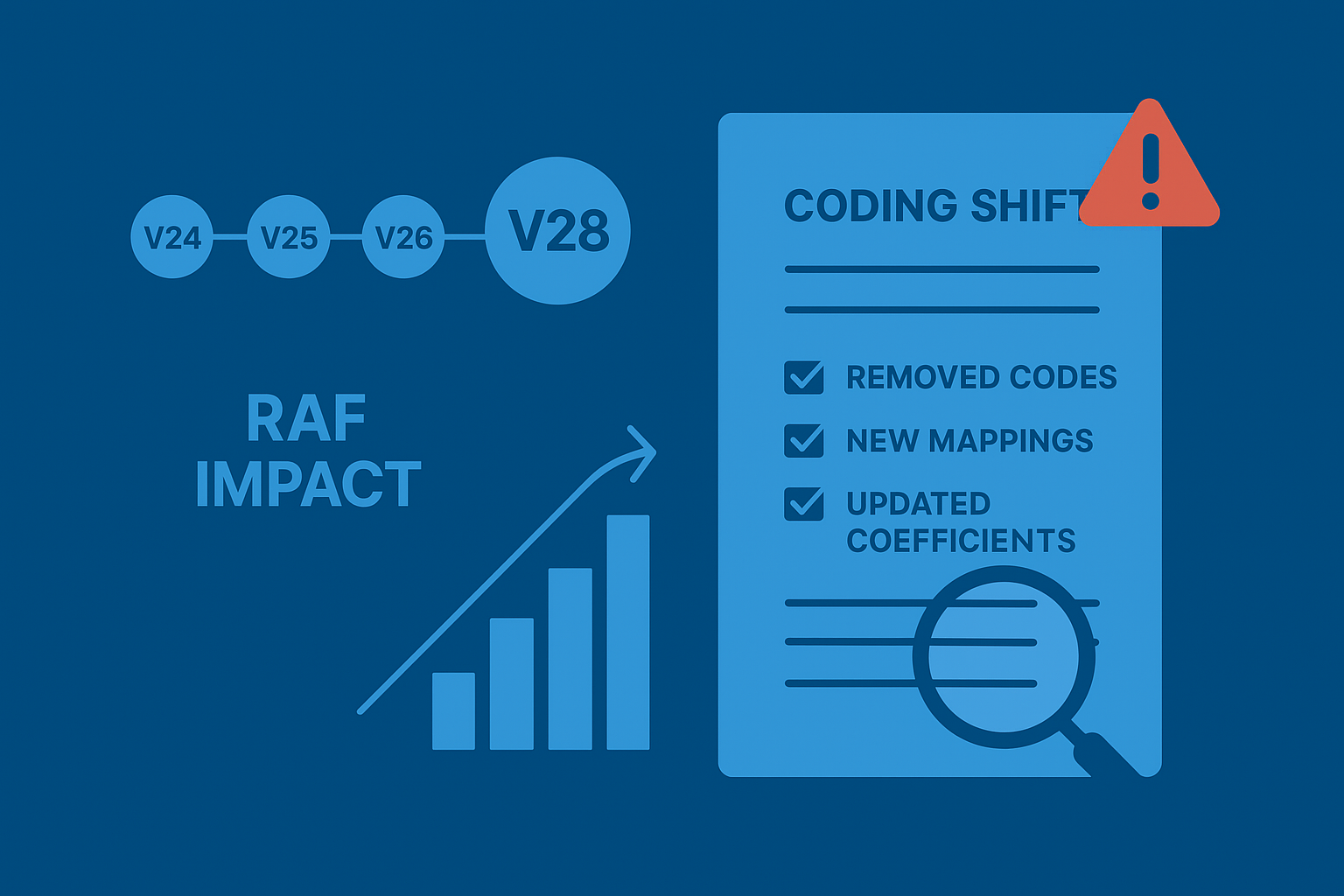
PY 2024: 67% RAF scores from V24, 33% from V28
PY 2025: 33% RAF scores from V24, 67% from V28
PY 2026: 100% RAF scores based on V28
MAOs need dual-model readiness now to manage this transition. Health plans must revise analytics models, retrain staff, and prepare providers for documentation expectations aligned to the V28 logic. Since scoring methodologies will blend in 2024 and 2025, dual-mapped submissions and comparative impact assessments are essential.
Uses 2018 diagnosis and 2019 expenditure data, creating more current alignment
Enhanced model reflects clinically stable and predictive diagnoses, improving precision
Stronger mapping with modern ICD-10 code structure results in greater granularity and fewer misclassifications
These upgrades ensure risk scoring keeps pace with evolving coding standards and clinical guidelines.
Diagnoses Mapped
The number of diagnoses mapped to HCCs has decreased from 9,797 in V24 to 7,770 in V28. This reduction ensures only clinically relevant and cost-predictive diagnoses are retained.
Payment HCCs Expanded
V24 had 86 payment HCC categories.
V28 expands this to 115, allowing for more nuanced representation of patient conditions and risk.
New HCCs Added in V28
209 new ICD-10-CM codes have been mapped to HCCs in V28.
Many of these are focused on capturing conditions with stronger predictive value, including behavioral health and rare diseases.
Significant Removals
V28 removes 2,236 ICD-10-CM codes that were previously mapped to HCCs in V24.
These codes were excluded for having weak associations with future healthcare costs or poor documentation support
Fewer mapped diagnoses in V28 reflect CMS's goal of eliminating codes with poor predictive value and ensuring every code that contributes to the RAF score has strong clinical justification.
HCC 298 – Retinal Vein Occlusion
HCC 279 – Severe Persistent Asthma
HCC 153 – Eating Disorders (Anorexia, Bulimia)
HCC 22 – Benign Carcinoid Tumor
HCC 17 – Malignant Pleural Effusion
These additions better capture high-acuity patients whose conditions were previously unrecognized under the payment model.
HCC 21 – Protein Calorie Malnutrition
HCC 23 – Parathyroid & Metabolic Diseases
HCC 88 – Angina Pectoris
HCC 59 – Mild Major Depression, Substance Abuse
HCC 134/135 – Dialysis Status, Acute Renal Failure
Removing these codes improves model integrity but may reduce scores for members with low-cost, non-predictive conditions. Providers must stay informed to avoid coding obsolete diagnoses.
Neoplasm group expanded from 5 to 7 HCCs, creating better differentiation across tumor types
Other categories, such as vascular and endocrine conditions, were similarly expanded and refined
Diabetes with macular edema → HCC 37 + HCC 298
Heart-lung transplant complications → HCC 221 + HCC 276
Dual-mapped codes reflect the complexity of some conditions that span multiple organ systems or complications. They provide richer context for RAF calculation and stratification.
V28 constrains RAF values by grouping diagnoses with similar cost profiles
Equal coefficient values now apply to some conditions regardless of severity or complications
For example, diabetes with and without complications may now carry the same RAF
CMS projects an average RAF decrease of 3.12% for MA plans in 2024
Estimated $11B in Medicare Trust Fund savings expected from V28 changes in 2024 alone
Plans must recalibrate revenue expectations and prepare coding workflows that prioritize fully supported, risk-adjustable diagnoses.
HCCs increased from 86 to 115, reflecting updated clinical classification
2,294 ICD-10-CM codes removed from contributing to RAF
268 new codes added, 40% related to perinatal and congenital categories
Conditions with inflated RAFs in V24 (e.g., Protein Calorie Malnutrition, T2DM without complications) have been reduced or removed
Precise, compliant ICD-10-CM coding is now mission critical
Provider documentation must clearly support code selection and demonstrate condition severity
Expand chart review programs
Strengthen clinical documentation improvement (CDI) initiatives
Integrate model-specific education for coding teams
Financial impact will vary based on member case mix, provider readiness, and coding accuracy
CMS-HCC V28 transforms how Medicare Advantage risk scores are derived. With increased specificity, updated mappings, and new RAF logic, the model rewards accurate, clinically supported documentation.
Plans and providers who start preparing now will not only ensure compliance, but also protect risk-adjusted revenue in 2024, 2025, and beyond.